

Top 10 Benefits of API Integration for Businesses
Summarise the blog with AI

Ever spent weeks just trying to get different systems to talk to each other? HRIS, payroll platforms, and benefits tools all have unique APIs, formats, and quirks. Your engineers get stuck building and maintaining one-off integrations, operations scrambles to fix errors, and sales waits on complex setups before closing deals.
API integration solves this. It connects multiple systems through a single, consistent interface, letting data flow seamlessly, automating repetitive workflows, and giving you real-time visibility, without tying up your developers.
In fact, 43% of fully API-first organizations generate over 25% of total revenue through APIs, proving that smart integration can fuel growth. Whether it’s synchronizing employee records, updating payroll contributions, or reconciling benefits enrollments, API integration keeps your processes accurate, consistent, and on schedule.
In this guide, we’ll walk you through the top 10 benefits of API integration for businesses, the types of integrations you can implement, and how they actually work.
Key Highlights:
- API integration connects multiple systems to automate workflows, reduce errors, and provide real-time visibility across HR, payroll, and benefits platforms.
- Different integration types, point-to-point, hub-and-spoke, cloud-based (iPaaS), and unified APIs, offer flexibility based on business scale and complexity.
- Businesses benefit from seamless operations, accurate data, cost savings, enhanced collaboration, scalable growth, and faster decision-making through integrated systems.
- Modern API integrations enable real-time syncing, error handling, embedded automation, and adaptability to new technologies for efficient, customized workflows.
What is an API Integration?

Businesses today rely on multiple systems: HR platforms, payroll software, and benefits tools. Out of the box, these systems rarely communicate, creating manual work and errors. API integration connects them so data flows automatically, keeping operations aligned and teams focused on value-driven work.
Key aspects to consider:
- Data structure and consistency: Ensure systems can align on formats for employee records, payroll, and benefits.
- Real-time vs. batch updates: Decide how often changes should sync across systems.
- Scalability: Consider whether the integration can handle growing volumes of data and new systems.
- Workflow automation potential: Evaluate which processes can move automatically without manual intervention.
- Monitoring and error handling: Plan for visibility into failed updates or discrepancies.
API integration requires careful planning to ensure systems communicate effectively and workflows stay reliable.
In the next section, let’s explore how API integration delivers real value across everyday operations.
Also Read: API vs Integration: The Differences and Intersections
How Can API Integration Benefit Your Business?
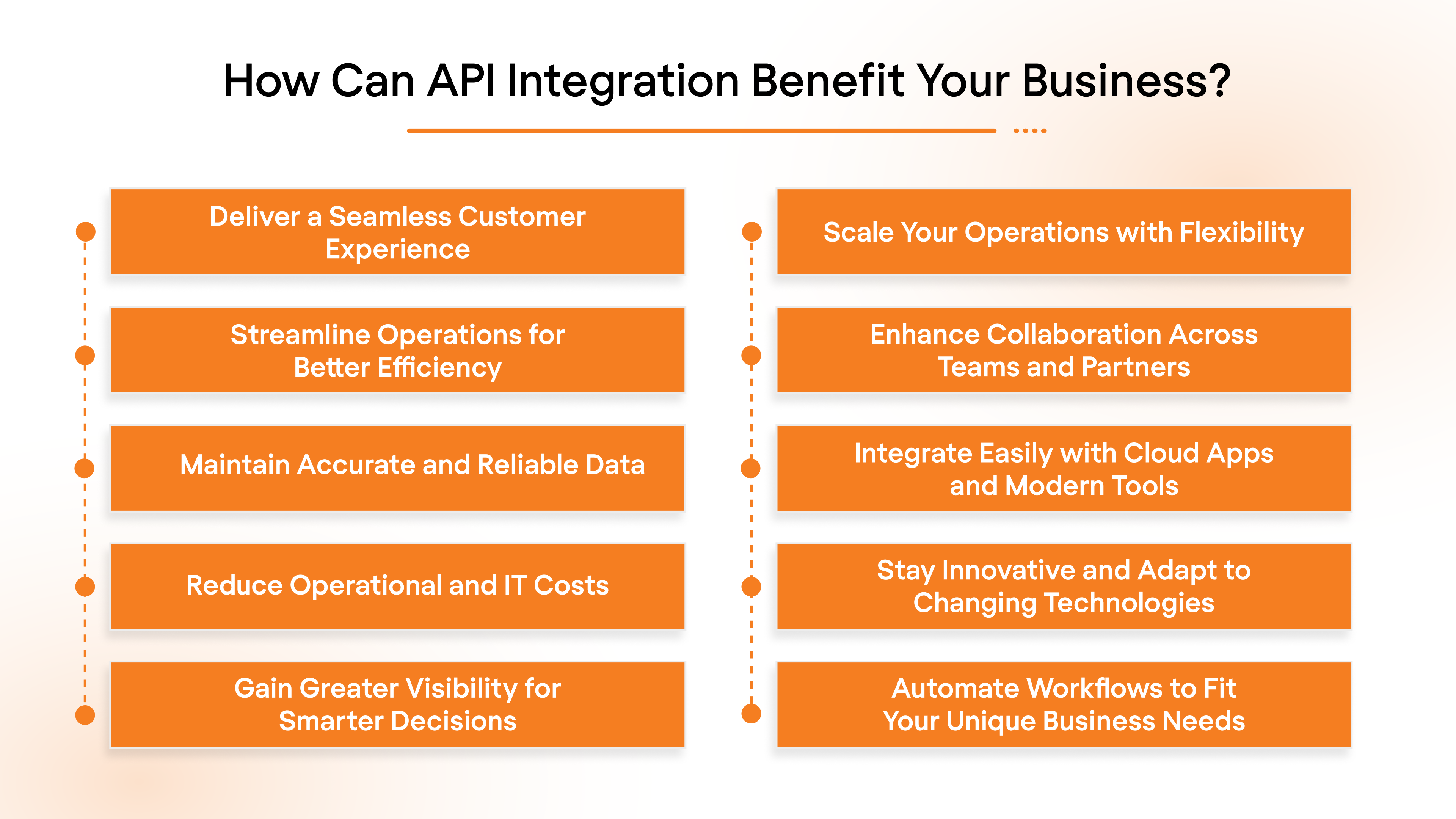
API integration offers measurable advantages that go beyond simple technical efficiency. Below, we’ll break down the key advantages in detail.
How Bindbee Can Simplify API Integration for Your Business?
Bindbee’s unified HR/payroll API is designed to remove the engineering and operational burden of building and maintaining multiple connectors.
Here’s how we can help you:
- Prebuilt Integrations Across 65+ Platforms: Gain instant connectivity to major HRIS, ATS, and payroll systems like Workday, ADP Workforce Now, Gusto, Rippling, BambooHR, and more.
- Real-Time Sync and Automation: Event-driven webhooks, automated retries, and self-healing processes keep employee and payroll data accurate and up-to-date.
- Compliance and Security by Design: SOC 2 and ISO 27001 indicators, HIPAA support, GDPR-readiness, and standard legal artifacts ensure your integrations meet regulatory requirements.
Bindbee solves this. With 65+ prebuilt HR, payroll, and benefits connectors, real-time syncing, and embedded automation, it takes the hassle out of integrations so your team can focus on product innovation, customer experience, and growth.
Book a demo today and launch your first API integration in under a week.