

HRIS Integration APIs: Connect HR Systems Like a Pro in 2026
Summarise the blog with AI
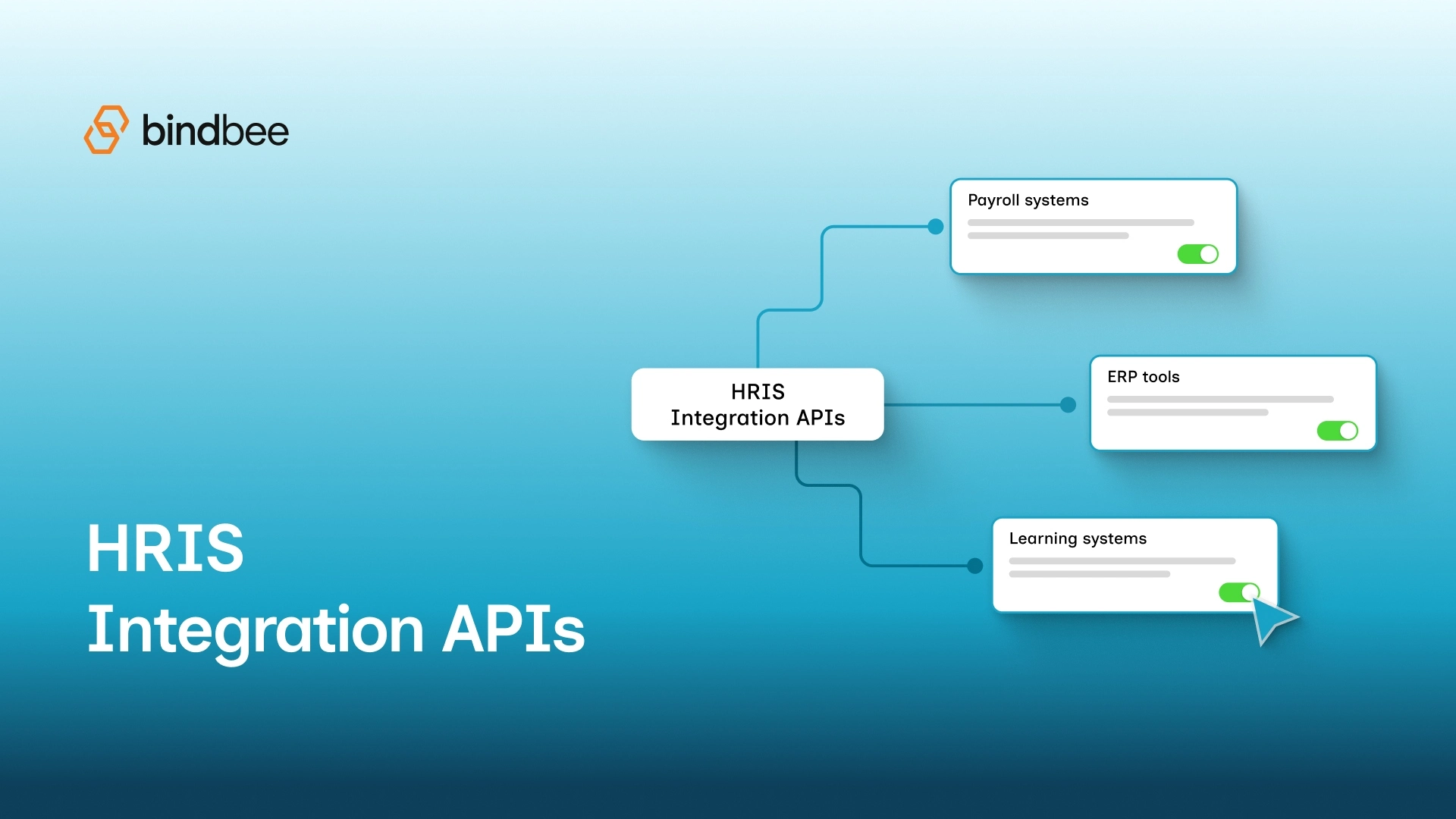
HRIS integrations are the foundation of most HR Tech and benefits products. If your platform can’t connect to the HRIS systems your customers use, you’re either losing deals or asking customers to manually export data — neither is a viable path to scale.
This guide covers what HRIS integrations actually require, the common patterns, and how Bindbee normalizes access across the entire category.
What HRIS Integrations Actually Need
A working HRIS integration isn’t just a data pull. It requires:
- Authentication management: OAuth flows, API keys, or service credentials per customer, renewed and refreshed automatically.
- Field mapping: Every HRIS names the same fields differently. “Worker Type” in Workday is “Employee Type” in ADP. Normalizing these requires deep per-system knowledge.
- Pagination and rate limiting: Large employer accounts may have tens of thousands of employees. Your integration must handle cursor-based pagination and respect vendor rate limits.
- Webhook handling: For real-time sync, you need to subscribe to HR events (new hire, termination, compensation change) and process them reliably.
- Error handling and observability: Data gaps, failed syncs, and API outages need monitoring, alerting, and automated recovery.
The Multi-Tenant Complexity
If you’re building a B2B product, you don’t have one HRIS integration — you have one per customer. Each customer is on a different platform with different auth, different field availability, and different quirks.
This multi-tenant model is where most in-house integration efforts break down. Managing 50 customer connections across 15 HRIS platforms isn’t an engineering project. It’s an ongoing operations problem.
Integration Coverage That Actually Matters
For US-focused HR Tech and benefits platforms, minimum viable coverage is:
- Workday (enterprise, complex API)
- ADP Workforce Now and ADP Run (enterprise and SMB)
- UKG Pro and UKG Ready
- BambooHR (SMB/mid-market)
- Rippling (fast-growing mid-market)
- Gusto (SMB payroll)
- Paychex Flex
- Paylocity and Paycom
Beyond that, you’ll encounter Bob (HiBob), Personio, Factorial, Sage HR, Zenefits/TriNet, Employment Hero (ANZ), Deel (global workforce), and dozens of others depending on your customer base.
How Bindbee Handles This
Bindbee is a unified API that normalizes HRIS data across Workday, ADP, UKG, and 65+ other systems through one integration. You connect once; Bindbee handles the authentication, field mapping, pagination, and ongoing maintenance for each system in the network.
- Read and write support: Pull employee data and push deduction changes or enrollment updates back to the HRIS.
- Deep data models: 16–17 normalized objects per integration covering employees, compensation, benefits, dependents, time-off, payroll runs, and more.
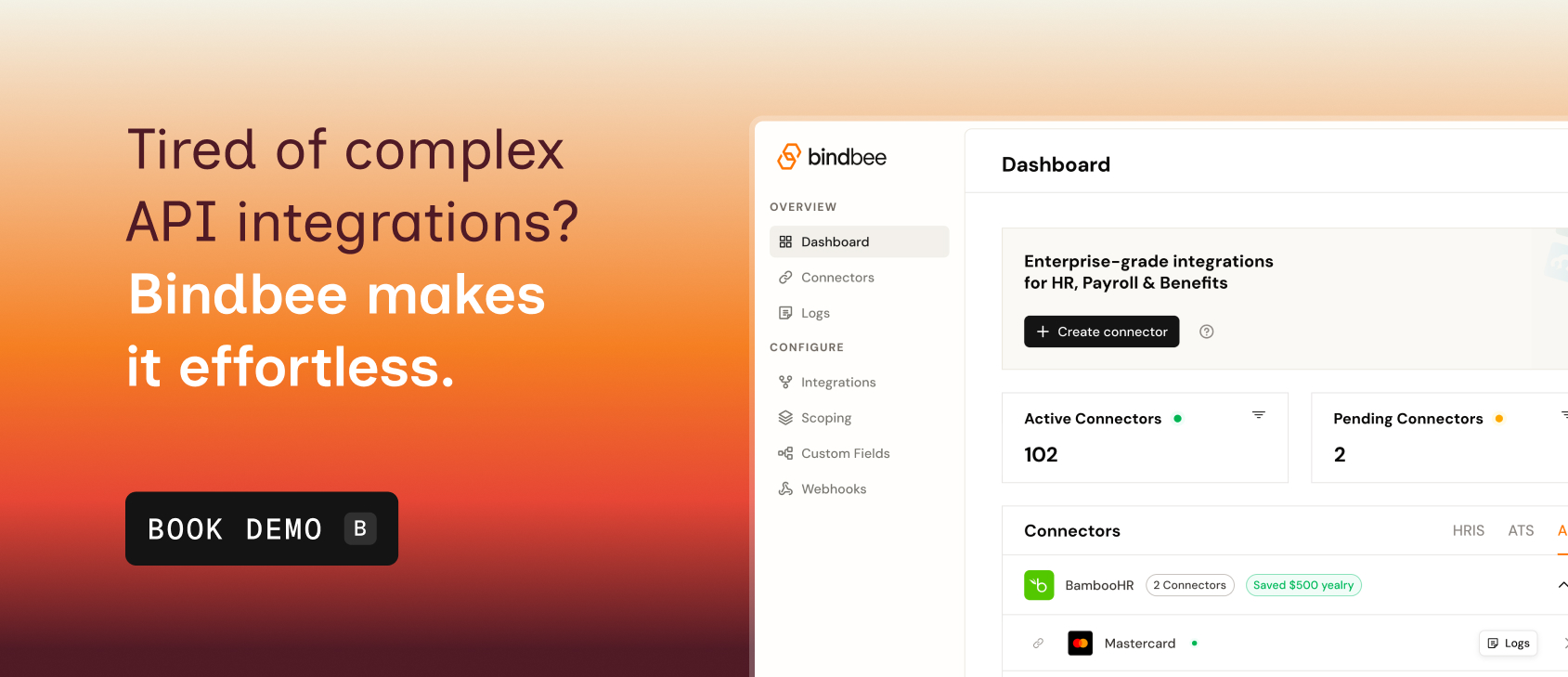
- Operational tooling: Dashboards showing sync status, error logs, and affected customers without building your own observability layer.
Book a demo to see how Bindbee handles HRIS integrations across 65+ systems.