

SOAP API for REST Developers: Complete Integration Guide.
Summarise the blog with AI

SOAP APIs predate REST but remain relevant for HR Tech developers because some enterprise HRIS and payroll systems — notably older Workday deployments and certain ADP integrations — still expose SOAP alongside or instead of REST. This guide covers what REST developers need to know to work with SOAP.
What Is SOAP?
SOAP (Simple Object Access Protocol) is an XML-based messaging protocol for web services. Unlike REST's resource-oriented approach, SOAP defines operations (methods) called through an XML envelope. The service contract is defined in a WSDL (Web Services Description Language) file.
Key Differences from REST
Format: SOAP uses XML exclusively. REST typically uses JSON.
Structure: SOAP messages have a defined Envelope/Header/Body structure. REST uses HTTP directly.
Contract: SOAP services expose a WSDL file describing all available operations. REST uses OpenAPI/Swagger or informal documentation.
Transport: SOAP typically uses HTTP POST only. REST uses all HTTP verbs.
Error handling: SOAP has a defined Fault structure. REST uses HTTP status codes.
Working with SOAP in Practice
Most modern languages have SOAP client libraries. The general workflow: download the WSDL, generate client code from it (or use a SOAP client library), authenticate (often via WS-Security or OAuth), call operations and parse XML responses.
The primary challenge is XML verbosity and the complexity of WSDL-generated clients. Testing is harder without tools like Postman's SOAP support or SoapUI.
How Bindbee Handles SOAP
For HRIS systems that still use SOAP (certain Workday configurations), Bindbee handles the SOAP layer internally and exposes normalized REST/JSON to your product. You don't need to build SOAP clients — Bindbee abstracts it.
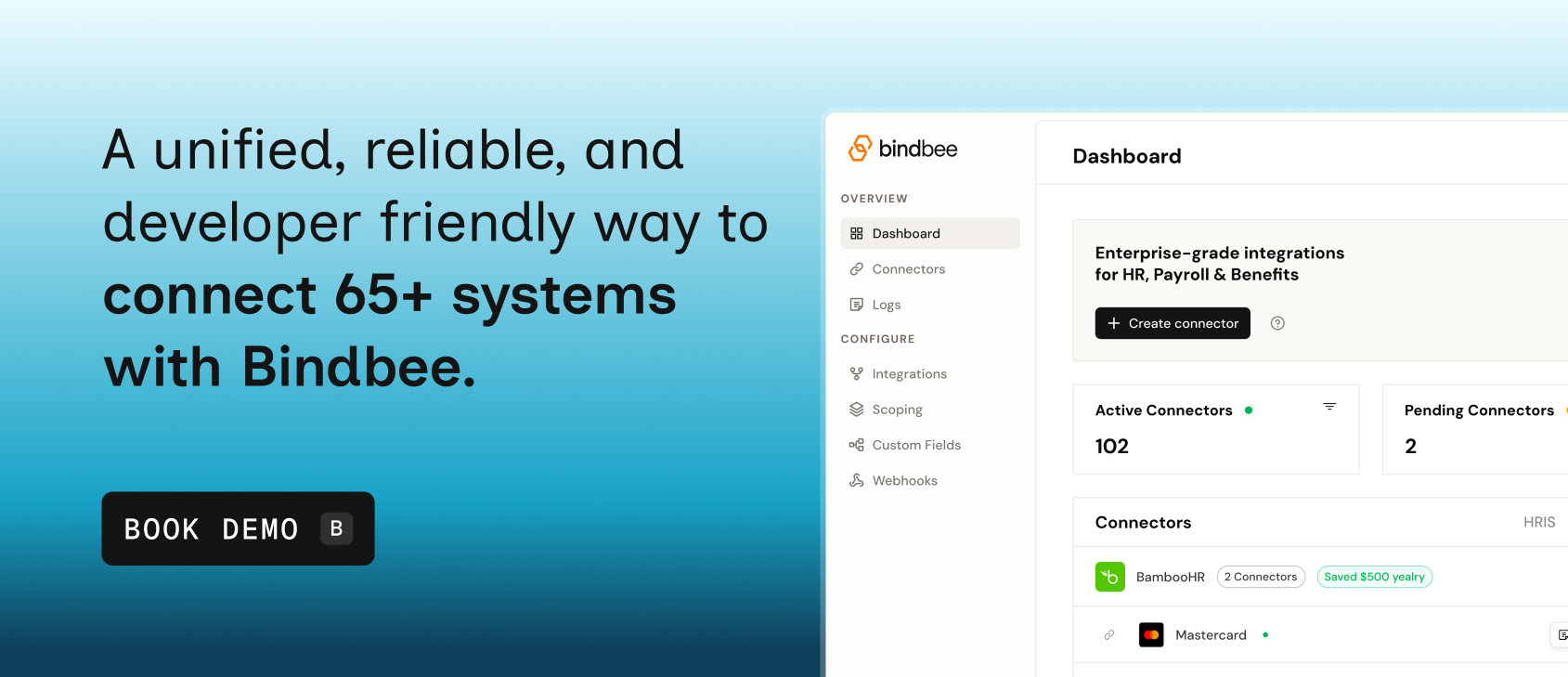
Book a demo to see how Bindbee handles SOAP and REST HRIS integrations.