

Unified Integration: Complete 2025 Guide + Code Examples
Summarise the blog with AI

Unified integration is reshaping how HR Tech and benefits platforms approach system connectivity. Instead of building and maintaining point-to-point connections to every HRIS, payroll, and ATS system, unified integration provides a single normalized layer that handles everything.
What Is Unified Integration?
Unified integration is an approach where a single API or platform abstracts multiple systems in a vertical behind a consistent interface. For HR Tech, this means one integration gives you access to Workday, ADP, Rippling, BambooHR, Gusto, and dozens more through the same data models and authentication flow.
Why It's Revolutionizing Integration Strategy
Speed to market: Instead of 4-8 weeks per HRIS integration, you connect once and support all of them. What took 12 months to build now takes weeks.
Maintenance reduction: Vendor API changes are absorbed by the unified integration provider, not your team. The ongoing engineering tax of maintaining connectors drops to near zero.
Data consistency: All systems return the same data schema. Your application logic doesn't branch per vendor. Bug surface shrinks dramatically.
Coverage breadth: A single integration gives you access to 65+ systems instead of the 3-5 you could realistically build and maintain in-house.
How Bindbee Leads Unified Integration for HR Tech
Bindbee is the unified integration platform built specifically for HR Tech and benefits companies. One integration gives you access to 65+ HRIS, ATS, and payroll systems with deep, normalized employment data models, read and write support, and enterprise compliance.
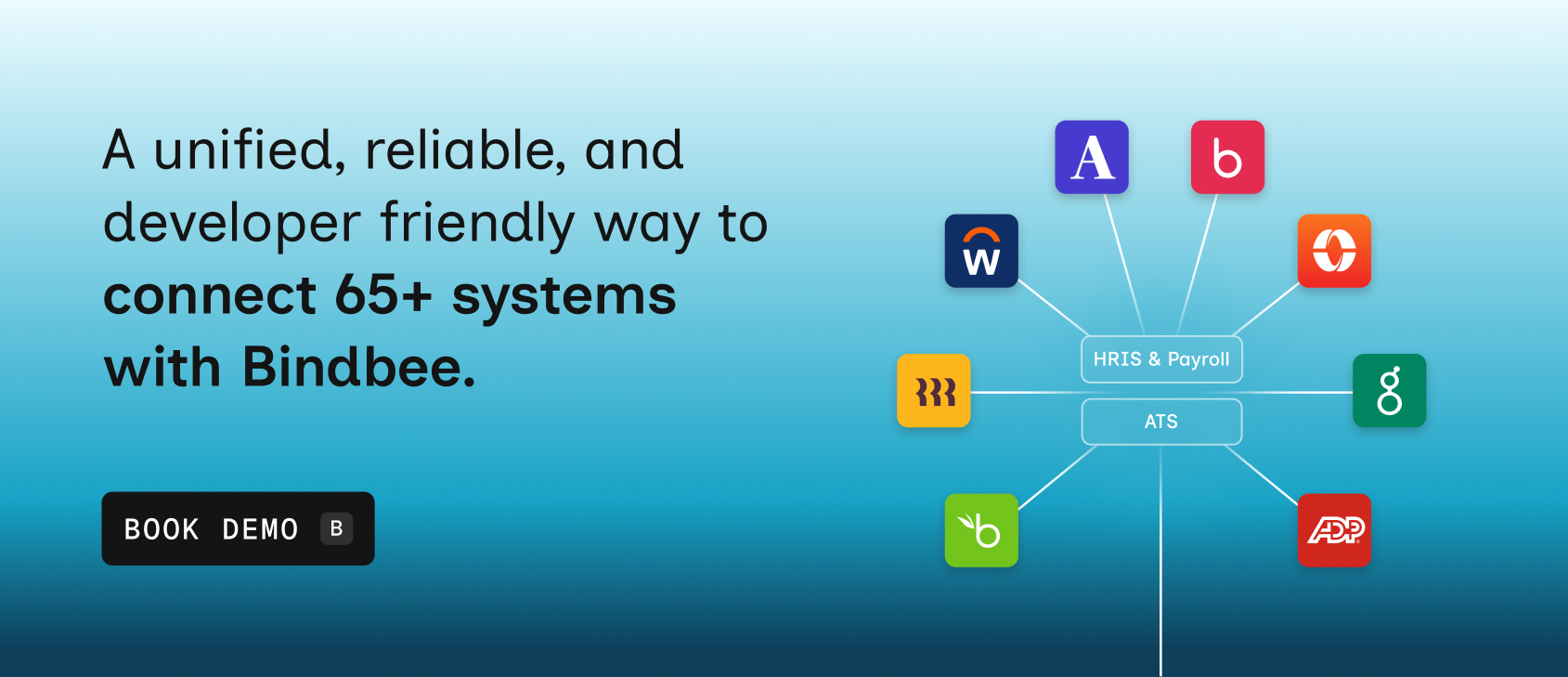
Book a demo to see how Bindbee's unified integration platform works.