

What is a Unified API?
Summarise the blog with AI
For HR Tech and benefits platforms managing multiple disparate systems, the integration overhead is real. Every new HRIS your customers use requires a separate connection, separate authentication, separate field mapping, and separate maintenance as vendor APIs change.
A unified API solves this at the architecture level. This guide covers what unified APIs are, how they work, and what to evaluate when choosing one for HRIS connectivity.
Key Highlights:
- A unified API normalizes data across multiple systems in the same category behind a single, consistent interface.
- For HR Tech and benefits companies, a unified HRIS API means one integration that covers Workday, ADP, UKG, Rippling, BambooHR, and dozens of other platforms.
- The difference between horizontal and vertical unified APIs matters: horizontal platforms trade breadth for depth; vertical platforms like Bindbee go deep in a specific category.
- Evaluation criteria include: HRIS coverage, data model depth, write-back support, SFTP adapters, and compliance certifications.
What a Unified API Is

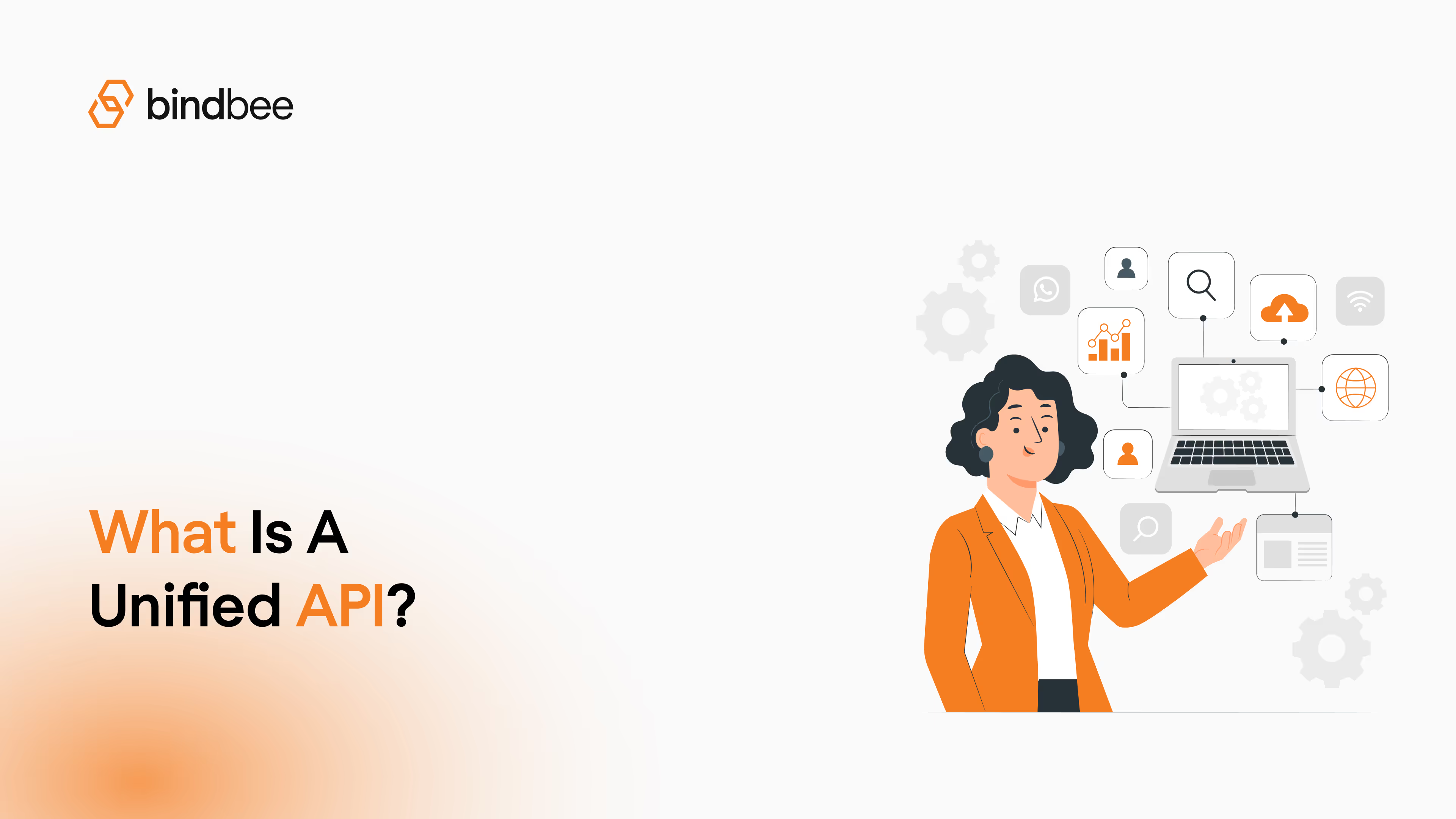
A unified API is a layer that sits between your product and the third-party systems you need to connect with. Instead of integrating with each system individually, you integrate once with the unified API. The unified API handles the per-system complexity internally and returns normalized data through a consistent schema.
For HRIS integration, this means:
- One API call to get employee data returns the same structure whether the customer is on Workday or Gusto
- Authentication, pagination, rate limiting, and field mapping are handled by the unified API, not your engineering team
- When a vendor changes their API, the unified API updates their connector — your integration doesn’t break
Horizontal vs. Vertical Unified APIs
Two categories of unified APIs exist, and the distinction matters for HR Tech companies:
Horizontal unified APIs
Cover many integration categories: HRIS, CRM, ATS, marketing automation, accounting. Examples: Merge, Unified.to. The goal is breadth — one platform for everything.
Tradeoff: depth in any single category is limited. HRIS connectors in horizontal platforms expose basic employee fields but often lack the benefits-specific objects (dependents, enrollment elections, deductions, payroll runs) that HR Tech workflows require.
Vertical unified APIs
Focus on one specific category and go deep within it. Example: Bindbee for HR.
Bindbee normalizes data across 65+ HRIS, payroll, ATS, and benefits systems. The data models go to the field level: employees, compensation, dependents, benefits enrollment, deductions, payroll runs, pay groups, time-off. Write-back support for deductions and enrollment is pre-negotiated across Bindbee’s connector network.
What to Evaluate in a Unified API for HRIS
System coverage
Does it cover the HRIS systems your customers actually use? For US-focused HR Tech, minimum viable coverage is Workday, ADP Workforce Now, UKG, BambooHR, Rippling, Gusto, Paychex, Paylocity, and Paycom. For European markets, add Personio, Bob (HiBob), Factorial, and Sage.
Data model depth
Does it expose the fields your product actually needs? For benefits platforms: dependent data, deduction configurations, plan elections, payroll run details. For 401(k) providers: compensation data, pay groups, deduction write-back. These require purpose-built HRIS data models, not generic employee schemas.
Write-back support
Can you push data back to the HRIS? Benefits deductions, enrollment updates, and contribution rates need to flow from your platform to payroll. Most horizontal unified APIs don’t have write-back capability. Bindbee has pre-negotiated write access across its connector network.
SFTP coverage
A meaningful portion of HRIS and payroll vendors still rely on file-based exports via SFTP. If your unified API only covers REST APIs, you’re missing customers on these vendors. Bindbee’s SFTP adapters normalize file-based data and serve it through the same API as modern connectors.
Compliance certifications
HRIS data is sensitive. SOC 2 Type II, HIPAA, and GDPR compliance aren’t optional for enterprise HR Tech deals. Verify that any unified API provider you evaluate has the certifications your customers’ security teams will require.
One API for 65+ Platforms
Bindbee consolidates connections into a single integration — allowing businesses to scale effortlessly.
For HR Tech and benefits companies, this means covering Workday, ADP, UKG, Rippling, BambooHR, and 65+ other HRIS and payroll systems through a single connection. One integration deployed once. Maintenance handled by Bindbee’s team.
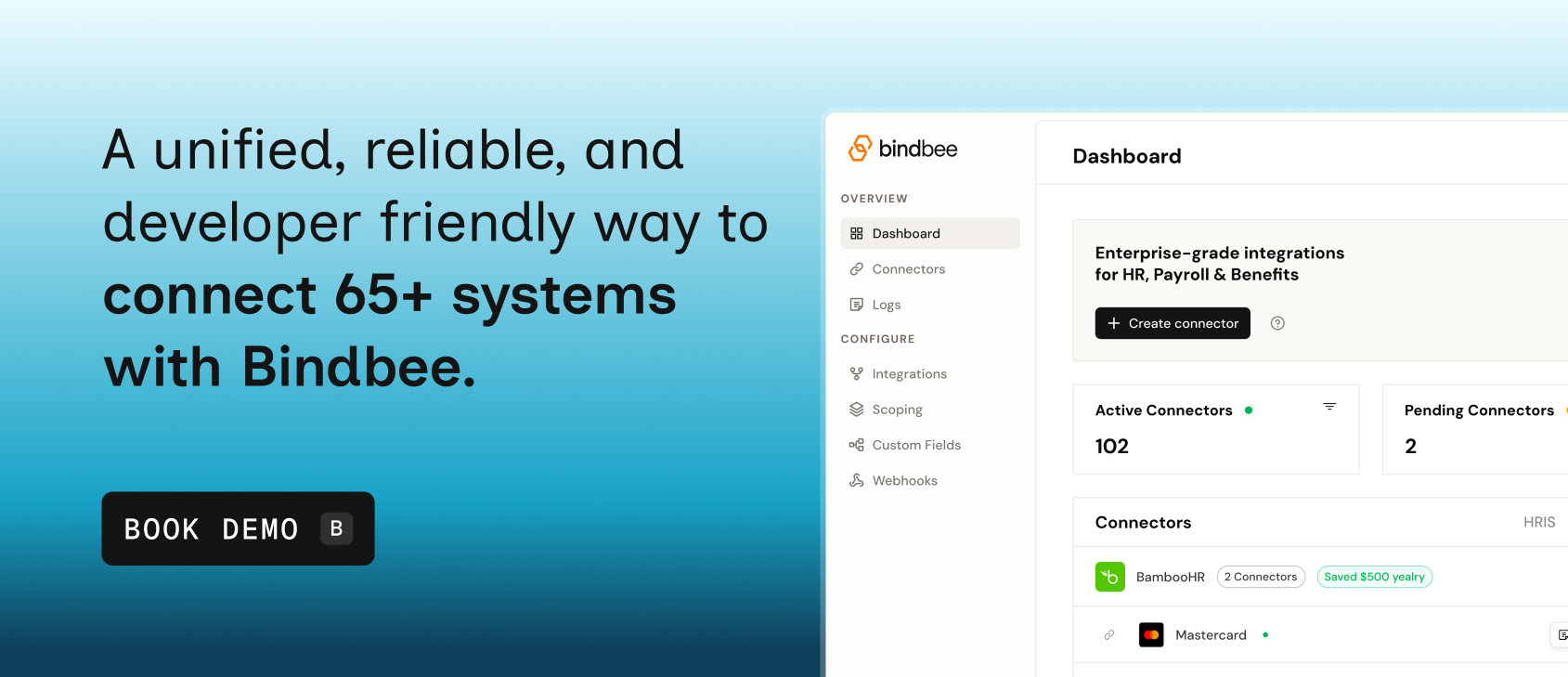
Book a demo to see how Bindbee’s unified API covers 65+ HRIS and payroll systems.