

Why Data Integration Is Important and Its Benefits
Summarise the blog with AI
.avif)
What happens when your product has to handle employee data from Workday, ADP, BambooHR, and a dozen other HRIS platforms — all at once?
For HR Tech and benefits companies, data integration isn't a nice-to-have. It's the difference between a product that works at enterprise scale and one that gets cut in sales reviews because it can't connect to a prospect's HRIS.
Why Data Integration Matters Specifically in HR Tech
Your customers don't move their HRIS for you. They're on Workday, ADP, UKG, Rippling, BambooHR — and they're staying there. Your product has to come to where the data lives, not the other way around.
This creates a hard constraint: either you build and maintain direct integrations to every HRIS your customers use, or you find infrastructure that does it for you.
The Cost of Getting It Wrong
Benefits companies that tried to build HRIS integrations in-house report:
- 4-8 weeks per integration initially
- 12-18 months to reach coverage across 15 systems
- $200K-$500K annually in engineering cost just to maintain those integrations
- Integration breakages eating into customer satisfaction and renewal rates
How Bindbee Solves This
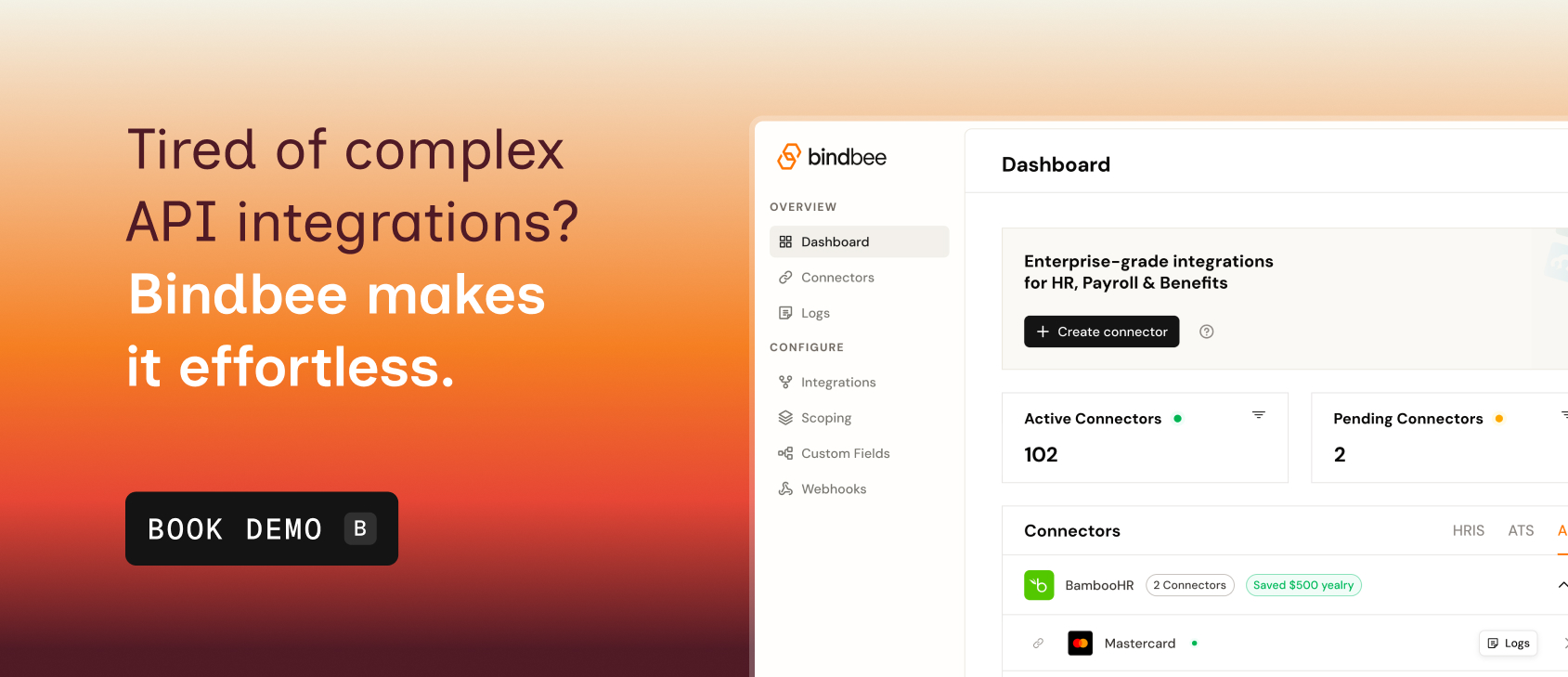
Bindbee normalizes data across Workday, ADP, UKG, and 65+ HRIS systems through one API. Whether your product needs employee records, payroll data, benefits enrollment, or deduction write-back, Bindbee delivers a consistent schema regardless of which system your customer uses.
Book a demo to see how Bindbee handles data integration across 65+ HRIS systems.