

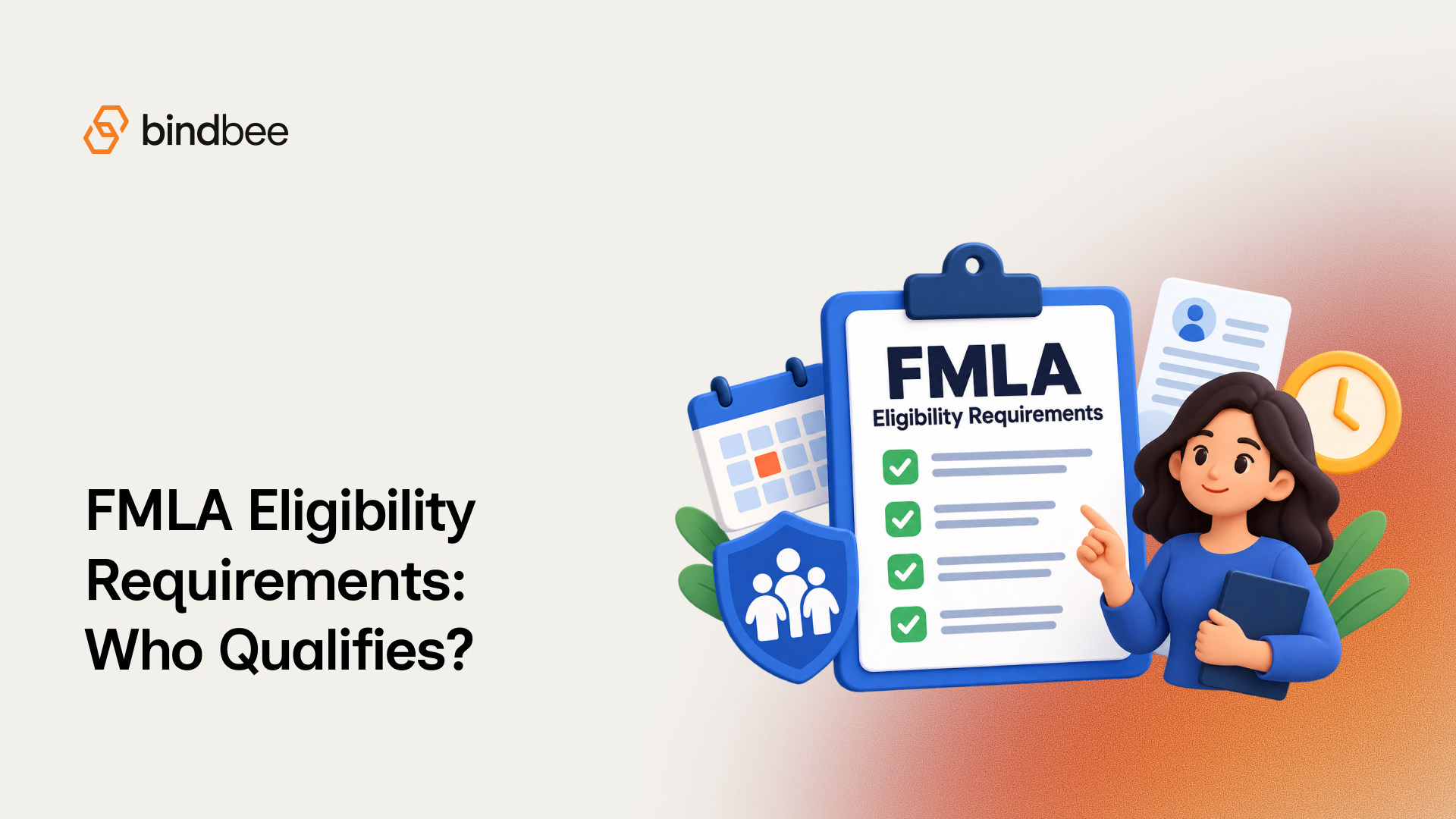
FMLA eligibility requirements: the rules and the data each test needs
Summarise the blog with AI
Last verified: October 13, 2026
Key takeaways
- Under the Department of Labor's standard rules, eligibility needs a covered employer, enough employment and service hours, and a qualifying worksite. Each test reads a different record.
- For private employers, the organization-wide coverage test and the employee's 50-within-75-miles worksite test answer different questions.
- For most civilian federal employees, OPM's Title II rules replace the DOL hours test with a qualifying-service requirement.
- The 1,250-hour test counts actual hours worked. Paid leave and paid-hour totals answer a different question.
- An eligibility notice and a leave designation run on separate five-business-day clocks with different triggers.
- Federal FMLA ineligibility leaves rights under an applicable state or local leave law open.
Working for a large employer is one part of FMLA eligibility. The employee also has to meet service and worksite tests, and each one is measured on its own date from its own record.
Under the U.S. Department of Labor's standard rules, an employee needs at least 12 months of employment and 1,250 hours of service in the immediately preceding 12 months. The employee must also work at a site where the employer employs at least 50 employees within 75 miles, often called the 50/75 rule. A covered employer can still have ineligible employees, and an eligible employee can still request an absence that needs a separate leave-purpose review.
This guide covers which authority applies, which records answer each test, and when the employer has to communicate its decision. If you are building software that runs these checks, How to automate FMLA eligibility verification turns the same rules into an input contract.
Which FMLA rules apply to a federal employee?
Most civilian federal employees fall under OPM's Title II FMLA guidance, which replaces the standard DOL employee-eligibility test. Some federal employees are covered under other authorities, so confirm the applicable rule set with agency HR before using either checklist.
For an OPM-covered employee, check the service and coverage rules together:
- The employee generally must be covered by Title 5 annual and sick leave provisions and must not fall within an applicable exclusion.
- The employee generally needs 12 months of qualifying civilian or military service, which may be nonconsecutive and may span agencies.
- The DOL's 1,250-hour service test does not apply to this group.
OPM lists current intermittent employees, employees on temporary appointments of one year or less, and specified appointees among those excluded. Its ordinary FMLA entitlement is 12 workweeks of unpaid leave. Agency HR determines coverage and eligibility, particularly when an appointment or earlier service makes the answer uncertain.
For everyone under the standard DOL rules, start with whether the employer is covered.
Is the employer covered by FMLA?
Employer coverage and employee eligibility are separate decisions. Under the Department of Labor's FMLA regulations, a private employer is generally covered if it employed at least 50 employees on each working day in at least 20 calendar workweeks during the current or preceding calendar year. Those workweeks need not be consecutive.
Public agencies and public or private elementary and secondary schools are covered regardless of size. Use the employer type to choose the coverage check, then assess the employee's own requirements separately:
The two 50-employee numbers answer different questions. The private-employer test asks whether the organization is covered. The 50/75 rule asks whether this employee works at a qualifying site.
Which employment, hours, and worksite records matter?
For the standard DOL test, employment history, service hours, and worksite assignment each come from a different record and are measured on a different date. A payroll total of paid hours can't settle the worked-hours question, and a remote employee's home address can't settle the worksite question.
Start with the employee's history. DOL rules allow employment months to be nonconsecutive, so part-time employment counts toward the 12-month requirement. After a break of seven years or more, earlier employment generally need not count, with exceptions for USERRA-covered service and written rehire agreements.
For the 1,250-hour test, use actual hours worked in the immediately preceding 12 months, under the DOL's FLSA-based hours principles. The DOL FMLA FAQ is explicit that paid and unpaid leave, including FMLA leave, are left out of that count. Check scheduled hours or paid-hour totals against worked-hour records. USERRA-covered service can also supply credit toward the employment and hours requirements. Where accurate hours records are missing, the employer carries the burden of showing that the employee lacks sufficient hours.
For a remote employee, the worksite is the office that receives their reports or assigns their work. DOL rules measure the distance by the shortest surface-transportation route, so a straight-line radius gives the wrong answer. The local employee count is taken when notice of the need for leave is given, while employment duration and service hours are measured as of the leave-start date.
Airline flight-crew employees have a separate DOL hours rule: at least 60% of the applicable monthly guarantee and at least 504 hours worked or paid during the previous 12 months, subject to the rule's specified exclusions. For anyone in that group, the special test decides the hours question.
Does the requested leave qualify?
An employee can meet every eligibility test and still request an absence that doesn't qualify. The Department of Labor's rules require a qualifying purpose, and the remaining entitlement is a separate check. For a serious health condition, the rule turns on inpatient care or qualifying continuing treatment, so a diagnosis label alone settles nothing.
Ordinary FMLA entitlement is generally up to 12 workweeks of unpaid, job-protected leave in the applicable 12-month period. Military caregiver leave allows up to 26 workweeks in a single 12-month period, and that cap is combined with ordinary leave in the same period, so the two are never stacked.
Classify the request before deciding whether to designate the absence. An unfavorable answer can come from two places: the employee fails an eligibility test, or an eligible employee's particular request doesn't qualify.
What notice is due, and when?
The employer has to tell the employee what it found. The DOL's FMLA notice rule generally gives the employer five business days to provide an eligibility notice after an employee requests leave or the employer learns of a potentially qualifying need, absent extenuating circumstances. Designation has its own five-business-day clock, which starts when the employer has enough information to decide whether the leave qualifies.
Handle the communications in this order:
- Start the eligibility-notice clock from the request or the employer's knowledge of a potentially qualifying need. The leave-purpose review can finish later.
- Tell the employee whether they are eligible and, if not, give at least one reason. The eligibility notification may be oral or written; the rights-and-responsibilities notice that goes with it must be written.
- Once there is enough information to decide whether the leave qualifies, send a separate written designation notice, generally within five business days, absent extenuating circumstances.
Keeping the two clocks separate means an open leave-purpose question never delays the eligibility response.
Does federal FMLA ineligibility end the review?
No. Under the DOL's federal-and-state interaction rule, federal FMLA does not supersede state or local laws that provide greater family or medical leave rights. An employee who qualifies under only one applicable law still has rights under that law, so a federal ineligibility finding calls for a separate check of state and local requirements.
The reverse also holds. When leave qualifies under both federal FMLA and a state or local law, it counts against both entitlements at once, and the employer must meet the requirements of both.
Where the data for each test comes from
Every test above reads a record that lives in the employer's HR, payroll or time system: hire and termination dates, worked hours, the office an employee reports to, and leave requests. Before treating an exported value as evidence, ask which system it came from and what period it covers. The data contract for each input, and what to do when one is missing, is the subject of How to automate FMLA eligibility verification. Tracking leave once it is designated is covered in How to build an automated FMLA tracking system, and what employer buyers test leave software on is in FMLA leave management software: the integration requirements to test.
Where Bindbee fits
Bindbee is FMLA-ready. Leave-management and absence platforms can pull the eligibility inputs above from each employer's own systems through one API, across 110+ HRIS, payroll and benefits systems. That includes hours actually worked from timesheet entries (where the employer's system tracks time), kept separate from hours paid; leave requests with their approval status; leave balances; dated employment records; and each employee's work location. Sync runs every 24 hours by default, and a webhook tells your platform when a sync has found changed records.
If you are building FMLA eligibility or leave tracking into your product, see how Bindbee supplies the inputs.
FAQ
Where can I get an FMLA form?
The U.S. Department of Labor's FMLA forms page has optional-use forms. WH-381 covers eligibility and rights and responsibilities, WH-382 covers designation, and DOL provides purpose-specific certification forms. Compliant alternative forms are permitted, and employees return completed certifications to their employer.
Does paid time off count toward the 1,250 hours?
No. The 1,250-hour test counts hours actually worked, and the DOL's FMLA FAQ excludes paid and unpaid leave, including FMLA leave, from that count.
When is the 50-employees-within-75-miles test measured?
When the employee gives notice of the need for leave. Employment duration and service hours are measured as of the date the leave starts.
Is a remote employee's home their FMLA worksite?
No. A remote employee's worksite is the office they report to or receive assignments from, and they count toward that office's employee total.