

How to Scale API Integrations: Complete Management Guide.
Summarise the blog with AI

Integration management is the discipline of maintaining, monitoring, and governing your product's connections to external systems. For HR Tech and benefits platforms, it's not just about getting integrations working — it's about keeping them working reliably across dozens of employer clients, each using a different HRIS or payroll system.
What Integration Management Covers
Monitoring
Know when integrations fail before your customers do. This means monitoring sync success rates, detecting stale data, alerting on authentication failures, and tracking data quality across all connected systems.
Error Handling and Recovery
Integrations fail for reasons outside your control: rate limits, API downtime, token expiration, schema changes. A managed integration layer needs retry logic, graceful degradation, and automatic recovery where possible.
Versioning and Maintenance
HRIS vendors release new API versions. When they do, your connectors need to update. Without active maintenance, vendor updates silently break integrations weeks later when customers notice missing data.
Authentication Lifecycle
OAuth tokens expire. Customer credentials rotate. Managing token refresh, re-authentication prompts, and secure credential storage is ongoing overhead for every connected employer.
Audit and Compliance
HR data integration requires audit trails: what data was accessed, when, and by whom. Compliance requirements (SOC 2, HIPAA) extend to the integration layer, not just your application.
How Bindbee Handles Integration Management
Bindbee provides a managed integration layer covering monitoring, error handling, versioning, authentication lifecycle, and compliance across 65+ HRIS, ATS, and payroll systems. The integration management overhead shifts to Bindbee, freeing your team to focus on product.
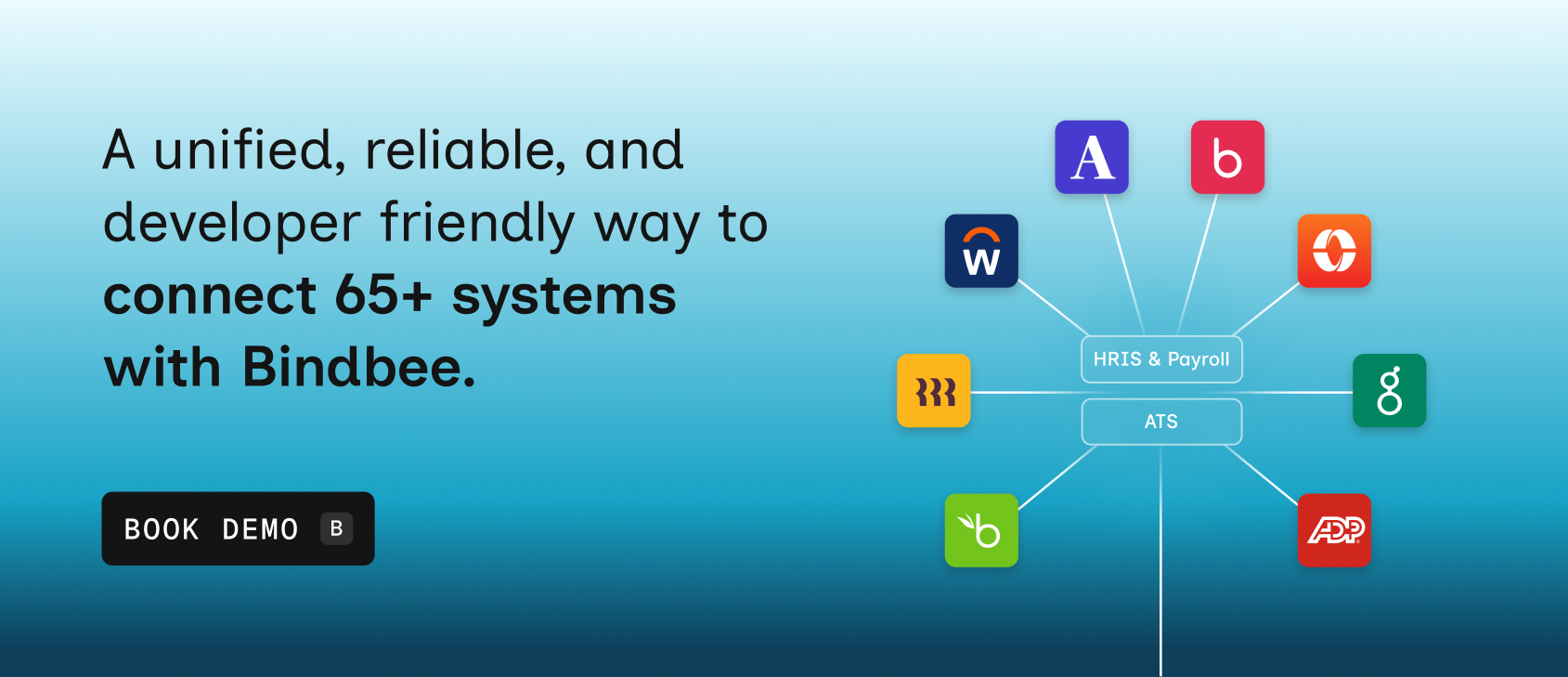
Book a demo to see how Bindbee handles integration management across 65+ HR systems.