

Software Integration Examples and Key Insights
Summarise the blog with AI
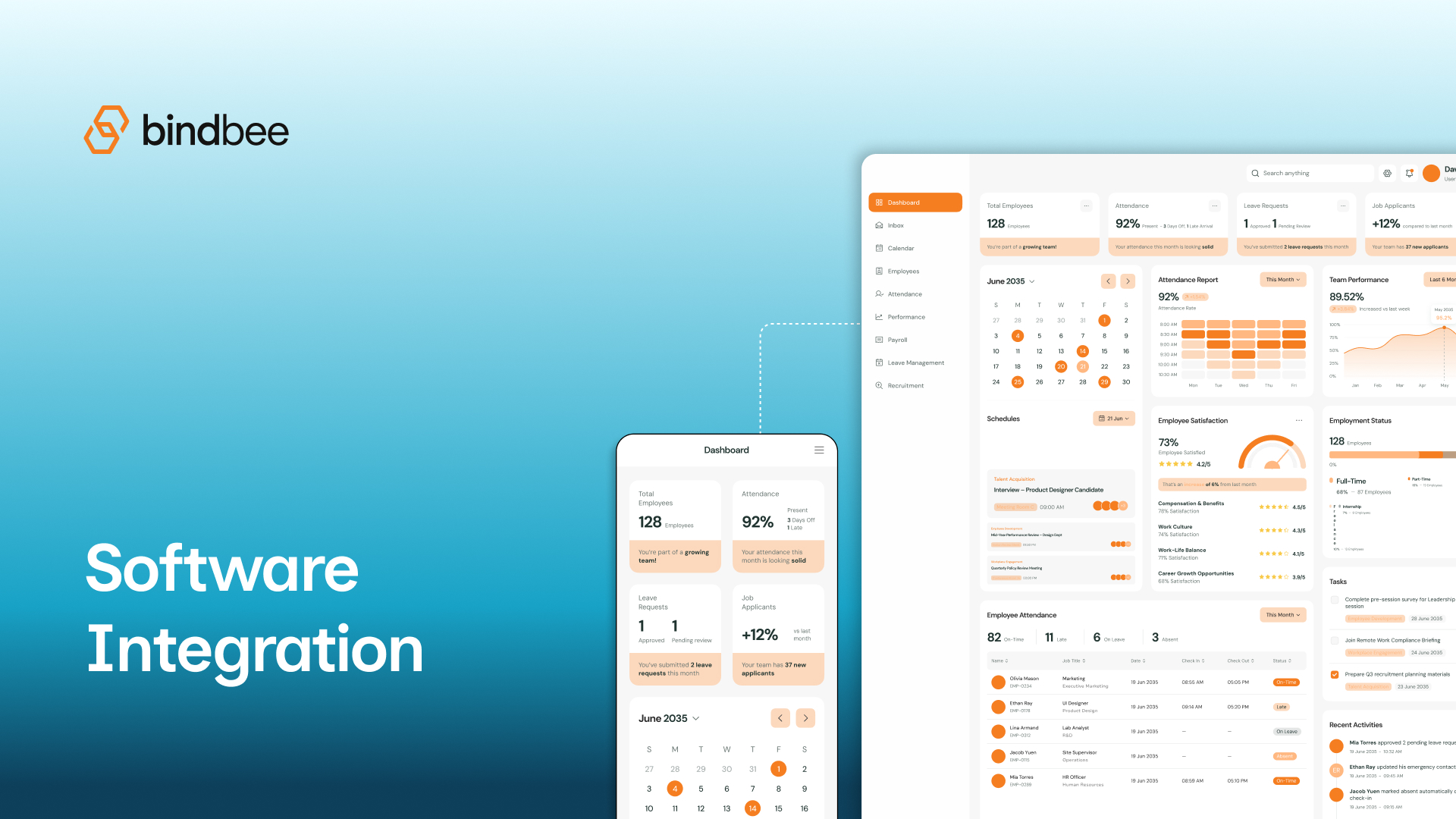
You are expected to ship integrations that your customers already rely on, but every new HRIS system you support means another sprint of API research, field mapping, and edge case handling. This guide covers what software integration actually requires at scale and how to build it without making it a permanent maintenance burden.
Key Highlights:
- Software integration complexity scales with the number of systems, not just their individual complexity. Each new integration compounds the maintenance burden of all existing ones.
- The most common failure mode is treating integration as a feature rather than infrastructure — built once, rarely revisited until it breaks.
- Normalization, multi-tenancy, and observability are the three architectural decisions that determine whether your integration layer scales or becomes a liability.
- Bindbee provides 67+ pre-built HRIS integrations with normalized data models so product teams can focus on core features instead of integration maintenance.
Why Software Integration Is Harder Than It Looks

The initial API call is the easy part. The hard part is everything that comes after:
- Authentication complexity: OAuth 2.0 flows with refresh token rotation, API key management, and per-customer credential isolation each require careful implementation.
- Schema divergence: Every HRIS platform calls the same field something different. Workday's "Worker" is BambooHR's "Employee" is Rippling's "Person". Normalizing these at scale requires a deliberate data model.
- Rate limits and pagination: Different vendors enforce different rate limits and use different pagination patterns. Building handlers for each adds per-integration complexity.
- Versioning: HRIS vendors release major API versions annually. When Workday deprecates a SOAP endpoint, every integration that touches it breaks.
- Write-back: Reading data is one challenge. Writing back deductions, enrollment changes, or contribution rates requires write access that most vendors restrict to formal partners.
The Three Architecture Decisions That Matter
Normalization
Build a normalization layer between vendor APIs and your data model. Map every HRIS field to your schema at ingestion, not at query time. This isolates vendor API changes to one layer and gives your product code a consistent interface regardless of which HRIS a customer is on.
Multi-Tenancy
Each customer has their own HRIS credentials, their own sync schedule, and their own data quirks. Build per-customer isolation from day one: separate credential storage, isolated sync state, and per-customer error handling. A failed sync for one customer shouldn't surface as an incident for another.
Observability
Integration failures are silent until a customer reports them. Build sync status tracking per customer, per record, and per operation. Alert on consecutive failures, not just single events. Track write operation outcomes separately from read operations — a failed deduction write is a compliance issue, not a UI inconvenience.
Bindbee's Approach to Software Integration
Bindbee implements these patterns across 67+ HRIS and payroll systems, giving HR Tech and benefits platforms a normalized API layer without the per-system engineering overhead.
- Single integration point covering Workday, ADP, UKG, BambooHR, Rippling, and 60+ more
- Normalized data models covering employees, compensation, benefits enrollment, dependents, deductions, and payroll runs
- Read and write support with pre-negotiated write access across Bindbee's connector network
- Per-customer observability through Bindbee's dashboard without building your own monitoring layer
Book a demo to see how Bindbee handles software integration across 67+ HRIS and payroll systems.