

How to sync employee leave data between HRIS and payroll
Summarise the blog with AI
Last verified: October 15, 2026
Key takeaways
- Treat leave synchronization as three separately owned flows: transactions, balances, and payroll results.
- Read each flow from the system that owns it, and record when you last read it.
- Compare like with like: the same units, schedule basis, and pay period on both sides.
- A changed request must adjust its prior payroll effect, so detect removed segments as well as added ones.
- Require transaction-level payroll evidence; matching totals only tell you where to look.
- Keep the transfer ledger separate from the FMLA archive, with medical certifications in their own restricted records.
Syncing approved leave into payroll is a controlled handoff, not a copy job.
An approval can arrive before a payroll cutoff while its correction arrives after it. A balance can be current while a payroll entry is pending. An import can succeed while the intended effect never posts. So the transaction, the balance, and the payroll result each need handling as a separate flow.
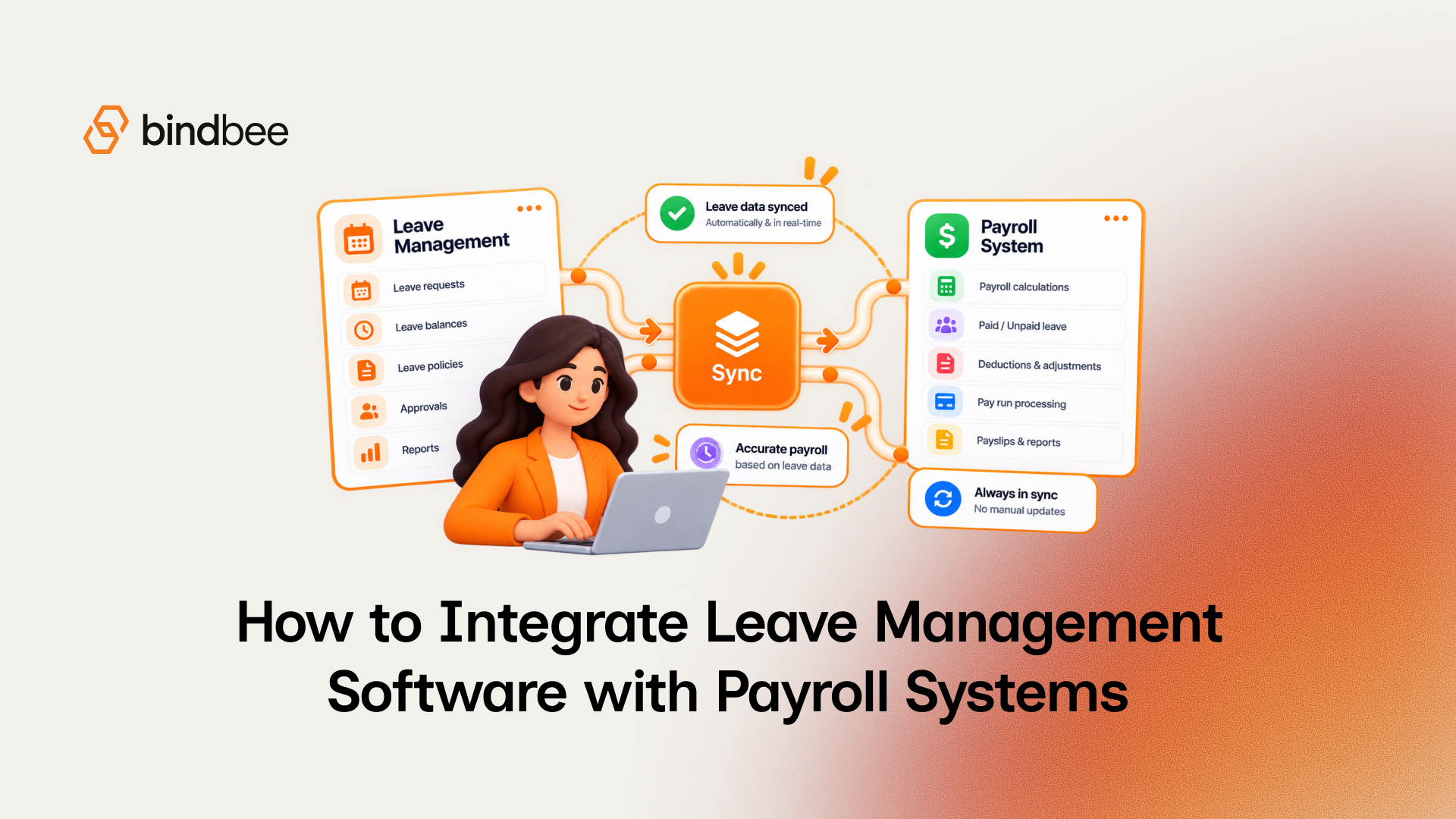
This guide covers keeping HRIS leave and payroll in agreement once entries are flowing: who owns each flow, how to read and normalize both sides, how to detect corrections, and how to reconcile individual effects and balances. For building the write itself, see how to integrate leave management software with payroll systems.
Decide which system owns each flow
Give each mutable object one authoritative owner, and agree on the ownership contract with the customer before choosing a connector.
A returned balance tells you what the balance owner calculated. A returned payroll result tells you what payroll processed. The receiving system reports both and owns neither.
Read each flow from the system that owns it
Reconciliation is only as good as what you can read. For each flow, confirm that the customer's systems expose it, in which direction, and how often you can read it.
Provider listings show why direction matters. The ADP Marketplace listing for the Vacation Tracker Connector for ADP Workforce Now describes employee profiles and leave balances flowing from ADP into Vacation Tracker, and approved leave requests flowing back to ADP Workforce Now as paid time off entries. The listing is for existing Vacation Tracker clients. It tells you which way balances and requests travel, and leaves open which edits, cancellations, and payroll results you can read back.
UKG's Developer Hub separates Pro HCM resources (payroll and HR data) from Pro WFM resources (scheduling, accruals, and time data), and lists UKG Ready separately with its own payroll resources. Identify the customer's UKG product family and enabled configuration before checking what you can read. A resource listed for one family says nothing about the other two.
For the customer's actual products, confirm:
- Transactions: approval states, partial days, paid and unpaid types, edits and cancellations, and effective dates.
- Balances: the value, the amount used, the policy it belongs to, and the as-of point.
- Payroll results: which entries posted to which run, and what report or record shows it.
- Freshness: how current each read is relative to the payroll cutoff.
Get the answers from the provider documentation and the customer's payroll owner before you design the comparison.
Normalize both sides before comparing
A leave code and a number of hours are not comparable until both sides are expressed the same way. A partial day has no reliable payroll duration until you know the employee's applicable schedule and the policy used to convert the source unit.
Pay treatment needs its own comparison. The payroll owner approves hourly earnings and salaried allocation or deduction behavior, and the integration leaves an unchanged salary alone. Under 29 CFR §778.218(a) and (b), payments for occasional absences such as vacation, holiday, or illness that are approximately equivalent to normal earnings may be excluded from the FLSA regular rate, but cannot be credited toward overtime compensation due. The provision excludes regularly scheduled rest days from those absences. Salary-basis rules for exempt employees on unpaid FMLA leave are covered in the payroll write-path guide. These classification-specific decisions stay with the payroll owner.
Detect changes and corrections on both sides
A new source version may or may not mean a new payroll transaction. First establish what happened to the previous version, then decide what effect, if any, now needs changing. Run this cycle for each payroll period:
- Read changes since the last checkpoint: pull leave records changed since your last read, with a small overlap so a record that landed mid-read isn't dropped. Upsert on stable IDs so the overlap is harmless.
- Compare versions: for each changed request, compare the current version with the one your ledger last recorded. Note changed dates, units, type, and status.
- Find removed segments: when a revision shortens or moves a request, list the segments that no longer exist. These need reversing in payroll, and they never show up as new records.
- Catch cancellations and deletions: treat a cancelled or deleted status as a removal of every segment the request produced. Run a periodic full read to catch requests removed at the source without a status change.
- Classify by run state: for each affected segment, check whether its payroll run is still open, closed but unposted, or posted. Apply the cutoff confirmed by the customer's payroll administrator, and test both sides of it; a processing time inferred from the provider's product name will be wrong for some customers.
- Route the correction: send open-run changes back through the write path as amendments, and posted effects to the payroll owner's approved reversal or adjustment path.
- Escalate: send late changes and outcomes you cannot establish to a named payroll owner.
If no machine-readable payroll result is available, use the customer's import report, payroll register, or pay statement detail, with supervised reconciliation.
Reconcile individual payroll effects
Reconciliation asks whether each eligible leave segment produced its intended payroll effect. A delivered message is only the first step. Keep a transfer ledger that joins the source request, segment, and version to the attempted operation, destination entry or run, timestamps, and observed outcome.
NIST SP 800-53 Rev. 5, AU-3 specifies audit-record content for event type, time, location, source, outcome, and associated identity. Applying that framework to a leave-transfer ledger makes each result explainable.
Aggregate hours can help locate a discrepancy, but equal totals cannot prove that the right employees and segments were processed. The acceptance target is one intended payroll effect per eligible operation.
Pilot through a complete payroll cycle and a correction path. Include partial days, differing schedules, cross-period requests, unpaid leave, retries after an uncertain outcome, pre- and post-cutoff edits or cancellations, terminated employees, and retroactive adjustments. Expand based on observed exceptions, with payroll signing off on unresolved differences.
Reconcile balances against their owner
A balance is a calculated value with an as-of point, and the two sides often calculate it at different moments. Before comparing, agree on three things with the balance owner:
- The as-of point: the date both sides' values describe.
- Future leave: whether approved leave not yet taken is already subtracted.
- The policy: which plan or policy the balance belongs to, and its unit.
Then compare the owner's value with what the receiving system displays. A difference in assumptions goes back to the balance owner. A difference in values with matching assumptions points to a missed or duplicated transaction, which the individual-effect check above should locate.
Keep the transfer ledger separate from the FMLA archive
For covered employers, 29 CFR §825.500 requires specified FMLA records to be kept for at least three years and made available for DOL inspection, in no particular form. Medical certifications and histories are confidential and kept separately from ordinary personnel files.
The transfer ledger explains what moved and what happened to it. It can reference designated FMLA dates and sub-day hours, but the supporting archive (notices, policies, designation disputes, certifications) stays in the customer's designated records, and certifications never travel with a pay entry. For tracking FMLA usage itself, see how to track intermittent FMLA hours and leave balances. For deciding which fields each connection receives, see employee data field scoping.
Decide whether unified infrastructure fits the contract
Once the customer has approved the flows and acceptance checks, evaluate infrastructure as a source of reads and change signals. Leave policy and payroll decisions stay with the application and the customer. A native connector or controlled file may already meet a particular customer's needs. A unified API is worth assessing when you need one read surface across many HRIS and payroll systems.
Here is how Bindbee supports each part of this reconciliation, per its published model availability matrix:
An incremental read for step 1 of the detection cycle:
Bindbee's modified_at is when Bindbee last updated its copy of the record, so set the watermark from the highest modified_at you saw, minus a minute, and upsert on id.
Bindbee syncs each connection every 24 hours by default, and the interval can be changed per connection on request. Webhooks fire when a sync runs and report what that sync found, so a webhook means the last sync saw a change. Payroll posting is still yours to confirm.
The application and customer still own approvals, pay-treatment decisions, cutoff policy, corrections, and transaction-level reconciliation. If you are evaluating Bindbee, discuss the customer's providers and required reads, along with freshness, cutoffs, and how you'll verify payroll results. The deciding question is whether the connection can satisfy the reconciliation contract you've written. For the HRIS side of leave integration, see HRIS integration for leave management software.
FAQ
How often should leave be reconciled between HRIS and payroll?
Every payroll period before cutoff, and again for any change that lands after it.
Why don't matching hour totals prove the sync worked?
Totals can match while the wrong employee or segment was paid. Reconcile each leave segment against its payroll entry.
How do I detect a cancelled leave request?
Look for a CANCELLED or DELETED status on read. Run a periodic full read to catch requests deleted at the source.
How long must FMLA records be kept?
At least three years under 29 CFR 825.500, with medical certifications kept separately.